
Do you know what your dog means when he wags his tail?
by Lenda | May 7, 2020 |
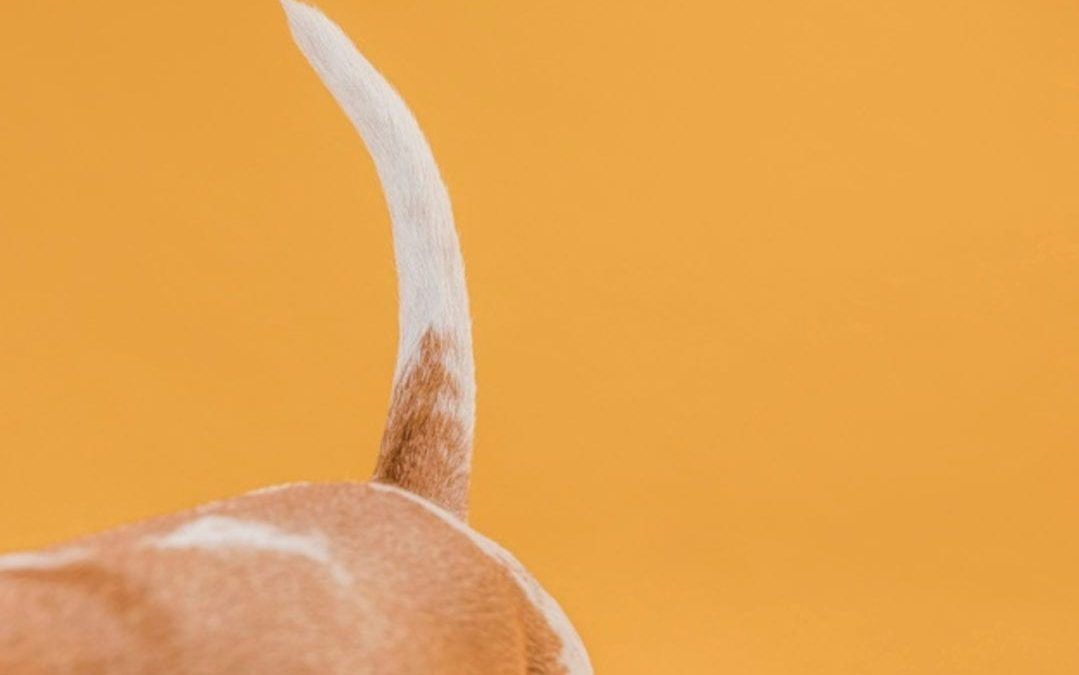
It has always been said that the emotional state of a dog can be known by the position and movement of its tail . Thus, if he wags his tail, he is supposed to be happy, and if he shows the famous “tail between his legs”, what he means is fear, shame or shyness. Well, it has recently been discovered that the relationship between your dog’s tail and his behavior is far more complex than that.
Several in-depth studies by veterinarians and researchers around the world on dogs’ brains and their behavior have recently shown that sometimes a tail flick can mean aggression , depending on how it is done.
Experts have documented that if they move the tail favoring the right side of the body with circular movements it means kindness , and yet if they do it on the left side it can indicate aggression and anxiety . In this groundbreaking study, Italian veterinarians tested dog interactions with their owners, with other dogs, with unknown humans, and with cats. Not surprisingly, contact with owners caused a strong bias to the right (or friendly response), while interactions with cats caused a strong tail flick on the left side.
Why does this happen? Scientists explain that the answer lies in the neurological structure of the dog’s brain . Like humans, dogs have two separate parts of the brain that are excited during different emotional states.
On the left side of the brain we can place love, affection, union and security while aggression and anxiety are located on the right . However, the physical response in the experiments was the opposite of the corresponding side in the brain. This is because the emotions that are felt on one side of the brain are represented on the other side of the body. So a puppy happy to see its owner wags its tail further to its right side.
But dogs are expressive animals, like humans, so there are many factors that must be taken into account to know the emotional state of a dog, in addition to the tendency to left or right.
For example, if something has caught the dog’s eye (a stranger at the door, the postman, or a malicious cat), it will tend to put its tail up and stiff. Also known as a flag , this pose means aggressiveness or a state of alertness . On the other hand, shyness and submission is often expressed with the tail under the buttocks and pressed against the stomach. These emotions are often detected during thunderstorms or visits to the vet.
It is important to note that dogs, like humans, have unique responses to emotional stimuli. The movement of its tail may be one more way to detect the emotional state of your best friend, but it is already known that the behavior of a dog is anything but simple.